My Name Is Rose

First, the book.

You know the type of quizzes such as ‘which animal are you most like’, ‘which celebrity are you’, ‘which Disney princess are you’?

I have a quiz question: what book are you?

I am The Name of the Rose.

Photo by Simone Dalmeri on Unsplash

I’ve read thousands and thousands of books, and I have hundreds of favourite ones. Yet, I love Umberto Eco’s first novel with incomparable fascination and devotion. To me, it is one of the finest books ever written. I’ve read it many times, perhaps once a year since the early 1980’s, always finding new layers and new depth. Falling in love over and over again.

Continue reading

Posted in Home | Tagged , , , , , , , , | Leave a comment

Rashomon, or a story of human ego

I re-read books I love, and I re-watch movies I love.

A few nights ago I re-enjoyed one of my favourite movies, Akira Kurosawa’s Rashomon, which is based on two short stories by Ryunosuke Akutagawa.

Photo by Leo Rivas-Micoud on Unsplash

Akira Kurosawa’s Rashomon was made in 1950. Kurosawa was in his forties, yet at the beginning of his career, which would, fortunately, last for almost half of a century and have a colossal cinematic and cultural influence.

Kurosawa’s most famous movie cuts deep into human nature, exposing its dark complexity. It gives us four versions of the same event, through the eyes of the woodcutter, the thief, the raped woman and the spirit of her murdered husband. Or did he commit suicide? We’ll never know what happened because the truth is relative, the memory unreadable, the subjectivity inevitable…

“Human beings are unable to be honest with themselves about themselves,” Kurosawa would explain to his assistant directors, who were somewhat confused with the script. “They cannot talk about themselves without embellishing… even the character who died can’t give up his lies when he speaks to the living through a medium. This film is like a strange scroll that unrolls, displaying human ego…”

About my other favourite movies and books some other time…

Posted in Home | Tagged , , , , , , | 1 Comment

Of Beauty and the Beast, book covers, and dreams (once more)

Photo by Kelvin Smit on Unsplash

… Both a little scared,

Neither one prepared,

Beauty and the Beast…

F# – E- F# – A – D

D – C# – D – F# – G

F# – G – E – F# – D

The first three lines are under copyright and they won’t appear in my book; the transcription of the music (a big thanks to my pianist brother!) that matches the words might. (If I get the green light form my copyright-and-trademark-agent sister, that is.)

Photo by Meredith Whitman on Unsplash

Dizzy with excitement of finishing my first duo–Asanni and Ellida–head full of new stories, I wrote the next chapter in my Red Cliffs saga.

And then life happened. Sort of.

Now I’ve decided to finish what I started three years ago. I’m making significant changes: it’s going to be one volume instead of two, 250 pages shorter than the first draft. Elizabeth is still a vardanni, ‘the guardian of the realm’ (about vardannies next time) and Brian is still a blaidd (a werewolf), but some things will be different. The book covers that I commissioned, lovely as they are, don’t work anymore.

I’ve loved this story (no title yet!), perhaps even more than Asanni and Ellida. It’s a retelling of Beauty and the Beast, my favourite fairy tale. It’s complex, emotional and deeply moving. There are scenes that never cease to make me laugh; others that always make my eyes burn every time I read them. And inside this long story, there are seeds of a few shorter ones, waiting to be written.

There are several dreams in this novel. They prepare Elizabeth, a young human woman and the unsuspected ‘guardian of the realm’, to face and accept the ‘slightly different’ nature of the man she’s fallen in love with, and the world that will soon become hers.

So here’s one of Elizabeth’s dreams:

We were walking through a forest. The ground was soft, covered with a thick carpet of new grass, pine needles and moss. Our steps didn’t make any sound. The forest was filled with lemony-yellow morning light.

“See, it’s still me,” he said. No sound came from his muzzle, but I could clearly hear him in my head. “Now that you know, you won’t go, will you?”

“It’s still me, too,” I said in the same way and turned around to let him examine me. ”How do you like it?”

Continue reading

Posted in Excerpts, Home | Tagged , , , , , , , , , , , , , , | Leave a comment

The Sisterhood of the Full Moon

If most families are like fudge–mostly sweet with a few nuts, as someone said–mine is just the opposite. Not tragically dysfunctional, yet unique in a way that makes me feel as if I’ve been sitting on a chair that has three legs instead of four but somehow holds balance.

What we can’t reach in real life, we can try to find in our imagination and dreams. In our stories, paintings, music, creative art… if we were fortunate enough to have a grain of talent and the courage to explore it.

Photo by Annie Spratt on Unsplash

My novels are as much about love as about families. Families that are not about blood, but about the people in your life who want you in theirs, as another quote says. Families who accept you. Families who would do anything to see you smile, and love you no matter what.

The Sisterhood of the Full Moon has been adapted from Ellida, Book II of the Red Cliffs Chronicles.

I woke up feverish, achy, and irritable. In less than twelve hours my human entity would go through an involuntary, quick, and terrifying transformation. Astrid the Wizardess would turn into Astrid the Bleithast, a huge and beautiful, but weak and helpless wolf. And she wouldn’t have any memories of it.

“You don’t remember because you’re fighting the werewolf inside you, Astrid,” Jack had said to me once. As the offspring of a wizard and a werewolf, you’re destined to become an Ellida, the powerful force of good and the ultimate authority of our clan. But first you must accept who you are …”

Well, nobody asked me if I wanted to become an Ellida, as noble as it sounded. Right now I only wished I could be an ordinary, mortal human girl. Not the wizardess who was not allowed to use her powers, nor the bleithast who had no control over her monthly shape shifting. 

If only Jack was here, I thought miserably, curled up on the couch in my living room. But Jack was away, and my hope that he would be back before my transformation was slipping like sand through fingers.

Multiple voices in front of the house yanked me from my lethargy. The next moment my aunt Betty, my mentor, Ellida Morgaine, and my cousin Maggie burst in, laughing, their hands full of bags. Behind them stood a fourth woman, who gave me a wary smile and closed the door.

Peyton Kinkaid, my boyfriend’s former girlfriend.


Continue reading

Posted in Excerpts, Home | Tagged , , , , , , , , , , , , , , , , , , , | Leave a comment

The cosmic ties between stories and writers

Maybe because of two big events of the last week–the solar eclipse on Monday and the final episode of season 7 of Game of Thrones on Sunday– everything between was a blur. (The songs are from Season 6, when GOT music has never been more beautiful.)

Through #14 welding glass, the sun looks like a small green orb. Very SF-ish.

Jon Snow is who we thought he was, although until the last night we didn’t know his true name. Now we do, and my life is complete.

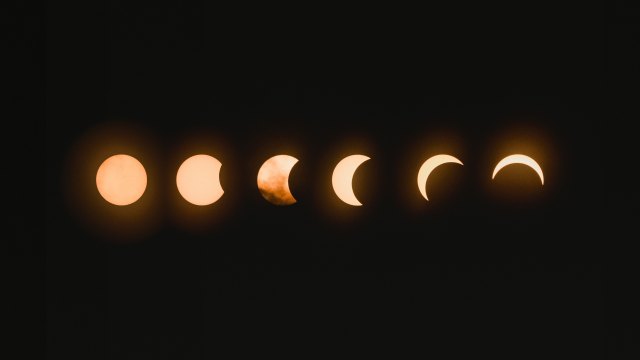
Photo by Mark Tegethoff on Unsplash

But, since the eclipse is old news and Game of Thrones really doesn’t need additional promotion from my website, I’ll talk about my books and my own fictional invention – ellidas.

An ellida is the female offspring of a werewolf father and a wizardess mother. This is only the necessary prerequisite. Not every daughter of the werewolf/wizard couple becomes an ellida. The most important ‘ingredient’ is of a spiritual nature. It’s in the inner beauty, humanity, strength and balance.

An ellida is the living embodiment of the ancient alliance between wizards and werewolves, the powerful force of good, the most treasured member of her werewolf clan, its highest authority, and the greatest honour granted to a clan. She brings prosperity, happiness and peace to her people, and never abuses the power given to her.

Ellidas are above the clan hierarchy; they have the power to overrule any alpha’s decisions. They are military leaders of their clans as well, although this particular function is ceremonial: an ellida’s life is too important to be risked in an open battle.

Once, Astrid asked her mentor, Ellida Morgaine, why it is that only women can be ellidas.

“Because no sane creator, or god, or force, or whoever you like, would grant such power to a man,” Morgaine said. “It would be too much for any man to handle…”

So how did I come up with this word?

I don’t know. Like for my Tel-Urughs, I thought a lot about the name that would frame the concept. I like names that start with vowels. That was my starting point. Then I tried different words. Different lengths. Different consonants. Open vowels, closed vowels… And stopped on ellida. I heard melody in this word. Lightness and strength at the same time. I often see words in colours, and this particular combination of letters and sounds was silvery-gold, with a touch of blue, like the full moon on the ink-blue night sky. Or like the shiny metal surface of a shield.

And thus Astrid became an ellida, and a shield, with eight little moons in different phases, ended up on the book cover.

Now what about the cosmic connections between writers and stories that form the title?

When my book was written, but still in manuscript, I came across a Celtic myth about Elathan, or Elatha, or Elada. (I still remember the goosebumps I got). He was a Moon/Sun God; he was forever young, had golden hair and sailed in a silver vessel. It was said he had a sense of humour and a sense of nobility.

Like Astrid, the Ellida of Red Cliffs.

You can read the story of the first ellida of the werewolves and wizards’ realm here on my website, in Excerpts.

Posted in Home | Tagged , , , , , , , , , , | Leave a comment

The story of the first Ellida


… I sprawled across Jack, closing my arms around his neck. I buried my nose into his strong neck, inhaling his scent, both animal and human, familiar, warm and natural.Ellida (THE LANGAER CHRONICLES Book 2)

Jack lifted his head toward the night sky. “Do you know that the Chinese call Sirius Heaven’s Wolf? It guards Heaven’s Palace, which is our Ursa Major,” he said. “We also call Sirius the Dog Star. We can’t see it now. It becomes visible just before sunrise around summer solstice.”

“The wolf has an important place in many cultures and civilizations.”

“Yes, but it symbolizes different things: in Japan, he’s regarded as a protector from other wild animals. For North American Natives, the wolf is a warrior allegory because of his strength and courage. In many cultures, he represents passion, love and fertility. In Anatolia, barren women in rural areas pray to a wolf to help them get pregnant. There are many human legends that talk about a union between a woman and a wolf. In some other societies, however, his ranking is pretty low.”

“In Western civilization,” I said. “In Greco-Latin mythology, with the exceptions of legends such as Romulus and Remus, the wolf is mostly pictured negatively. Later, wolves became connected with witches and evil forest spirits. In many cultures, he represents the underworld. Not very flattering. And utterly unfair.”

“Do you know the story about the first Ellida?”

“No. Tell me, please.”

“Are you warm?”

“Are you? You’re lying on the snow.”

I heard his soft chuckle. “I’m okay for now. Don’t worry, I’m well protected. So…

Long ago, there were two mighty asyrs, the wizard kings. Affan was a good ruler, whose kingdom thrived until the bad wizard, king Studen, the ruler of the far, frozen North, stole Affan’s Horse with the Silver Mane, and his beloved daughter Illeanna. Heartbroken and without his magic horse that made him undefeatable in battle, he turned to his friend, blaidd Harlan, for help. Harlan had been in love with Illeanna for as long as he could remember, but never dared to ask Affan for her hand, even though he was the Einhamir. ‘Bring me my daughter and the Horse with the Silver Mane back, and’—this is a very important detail, Astrid, you’ll like it—‘if Illeanna agrees, with my blessing she’ll become your wife,’ Affan promised.

“Harlan changed into a wolf. He didn’t stop running for three days and three nights, until he reached king Studen’s palace. He found the room where Illeanna was sleeping. He woke her up and scared her to death because he hadn’t come to her as a dyn–a man–but in his wolf shape. As they brushed against each other, they felt the warm current of the bond run through their bodies. And Illeanna, who had never given Harlan a second thought before, fell in love with him.

“Being a clever asanni, Illeanna didn’t exactly sit in her room and mope waiting to be saved. She had prepared a magic powder and used it to enchant the palace to secure them enough time to escape. They rushed to the stables and took the Horse with the Silver Mane and ran from the palace. They’d almost made it when the guards saw them and closed the gate.

’Get off the horse, Illeanna!’ Harlan said. ‘It can jump over the gate, but not with you on its back! You’re going with me!’

So Illeanna climbed on Harlan’s back and they jumped over the gate. The Horse was already waiting for them on the other side.

“King Studen wasn’t ready to accept defeat. He raised his army and marched to Affan’s kingdom. There he met not only King Affan’s soldiers, but also Harlan’s warriors, who came to fight alongside Affan. It wasn’t long before king Studen was defeated. King Affan kept his word and gave his daughter to Harlan. ‘As I promised, I’m giving you my daughter to be your wife and the mother of your children, Harlan,’ the king said. ‘She’ll bear you many sons, but your first child is going to be a daughter. She will be an ellida, and she’ll bring happiness and prosperity to your people.’

“And from now on, when a werewolf clan proves to be strong enough in its spirit and good deeds, a female child from a union between our two kinds will become the clan’s Ellida. She will be a powerful force of life and good, and a token of the alliance between my people and yours.”

Jack finished the story, but the sound of his soft voice still echoed in my ears.

“That’s a beautiful story, Jack. Thank you.”

He shifted slightly under the weight of my body. “It has many similarities to a Russian legend about—”

“—King Afron, Yvan Vyslavovich and Elena the Beautiful,” I finished. “Yes, it does. But then Afron wasn’t a wizard and Yvan wasn’t a werewolf, although his best friend was. There was no Ellida and the horse mane was gold.”

“And for us, it’s not a legend. It did happen. Affan lived long ago. Illeanna did marry Harlan, and they had a daughter who became the first Ellida of our realm. She still is.”

“I know,” I said. “Morgaine told me she’s sort of the ‘Reverend Mother’ of our sisterhood. The name, Ellida, reminds me of Elatha, or Elathan, from Celtic mythology. He was a Moon God; he was forever young, had silver hair and sailed in a silver vessel. It was said he had a sense of humor and sense of nobility.”

“Ah, I wondered if you were going to make the connection. Do you know what your wizard’s chronicles say about him?”

“No. I was raised more or less as a human girl, remember?”

“I know, love. Well, according to your sources, he was indeed a noble and wise man with a nice sense of humor. He was a wizard, not a god, of course, but for the people of those times, there wasn’t much difference between the two. He was an Albino, hence the silver hair. He introduced agriculture to a small group of hunter-gatherers, saving them from starvation during long winters. They thanked him by turning him into a mythological being. Affan lived many centuries after Elathan’s time, but Affan must have known about wise, noble and altruistic Elathan. And if you want to describe an Ellida in a few words, what would you say? Wisdom, humanity and nobility—the principal qualities the vast majority of you possess…”

Photo by Les Anderson on Unsplash
 

Posted in Excerpts, Home | Tagged , , , , | Leave a comment

Everything I always wanted to tell you, but no one would ask me

How did I come up with the titles for my first two books? What does asanni mean? Ellida?

I’m glad you asked.

There are three other races of humanoids in my novels: werewolves, Tel-Urughs and wizards.

The ancient homeland of my wizards is Northern Europe, the area that would later be populated by Old Norse-speaking human tribes.

There were two pantheons in Norse mythology: Æsir and Vanir. The male member of Æsir was called ás; the female was asynja, plural asynjur. I stripped my Asyngaer (wizard-kind) of their divine status and slightly changed the terminology: asyr is a male wizard, and asanni is wizardess.

Meet Dr. Astrid Vandermeer-Mohegan, an asanni. She’s pretty, super-smart and a hell of a doctor (she’s a trauma and orthopedic surgeon). A sociable introvert. Deeply human. A tad naive. Headstrong. Brave. Loyal. Passionate about the things she loves. The bravest when she’s scared to death.

A young woman with a divine voice, who dreams to sing the role of the Queen of the Night from Mozart’s The Magic Flute, one of the most difficult and most beautiful soprano arias.

My wizards and wizardesses possess a unique grace and elegance. Astrid is not an exception. Wizards are tall, they have beautiful, luminous eyes. Astrid’s are brilliant blue. (At least in the first book.) Wizards are cool and logical. As Tristan Blake, Astrid’s Tel-Urugh friend, once described them:

“… They’re like a crossover between Tolkien’s Elves and Mr. Spock from Star Trek. Their rational side is prominent. Not that they do not feel, they do, as intensely as we do, they just don’t show it. But Astrid does…”

But Astrid is also a half-bleithast (she-wolf). Werewolves are just on the opposite emotional spectrum from wizards: passionate, sociable, often impulsive, possessive. And prone to jealousy, a sentiment Astrid regards as unnoble.

So how can someone be rational and impulsive, cool and passionate, sociable and extremely private at the same time? Well, as Astrid is going to find out, there are two ways to deal with this impossible mix:  you can fight one part of you, keeping it suppressed (she tried but it didn’t work out at all), or you can let your two roaming spirits merge into one incredible entity.

But there is more purpose in Astrid’s heritage than to never let her have a dull moment: as female offspring of a wizardess and a werewolf, she may become a rare, precious and powerful ellida, a living embodiment of the ancient alliance between wizards and werewolves…

But, this is another story.

Before I leave–a happy announcement. I’ve had two more followers. I want to thank them for finding my website and liking it enough to ‘enter the world hidden within our own’.

Photo by Aaron Burden on Unsplash

Diana Damrau sings the Queen of the Night aria, Astrid’s favourite.

Posted in Home | Tagged , , , , , , , , , , | Leave a comment

The Story of Tel-Urughs – part II

In my last post, I touched on the story of Tel-Urughs, the creatures similar to vampires who inhabit my imaginary world. I mentioned that they need only a small amount of human blood to live and thrive.

Why did I make them warm-blooded, robust, bursting with life?

Vampires have been populating the world of fiction–and human imagination– for a long time. It’s not easy to come up with new or even modified concepts about them.

I thought a lot about vampires before I created my Tel-Urughs. I found a hole where I least expected to find it: in one of the fundamental and most enduring ideas about vampires as  undead creatures, cold to the touch.

Through the entirety of human history, blood has been a symbol of life, not death. If they lose too much blood, people die. Blood transfusions, on the other hand, often save lives. Even in folklore, vampires feed on life essence — blood– of the living.  Shouldn’t it make them more alive? And warm?

So I gave the old story my own twist. Human blood is the source of my Tel-Urughs’ energy, vitality and longevity, of their powers. It makes them who they are, and that’s why the connection between them and humans is so important.

It’s a symbiosis, and like every symbiotic relationship, it requires a great deal of balance. Humans are the key for Tel-Urughs’ existence; in return, Tel-Urughs help the progress of their human relatives’ civilization.

For supernatural romance fiction one aspect of Tel-Urugh and human lives is particularly attractive: their sexual interactions. (I really can’t find much correlation between undead and cold on one side and and sexual attraction on the other.) Since a Tel-Urugh hasn’t featured yet as a main character in my novels, this concept is yet to be explored. Stay tuned, because Christian Enescu, a duke, a count and an architect, is about to fall in love…

But there are a few of Tel-Urughs in supporting roles. Among them are Livia and Tristan Blake, from Asanni and Ellida. They’re both doctors: Tristan is a surgeon, and his wife an allergy specialist, currently working on a safe cure for human food allergies. They temporarily put their careers on hold to bodyguard, 24/7, their young wizard friend and fellow doctor, Astrid.

I know everything about them, of course, including their love story, but when I was writing Asanni, I decided to introduce them as complete, finished characters. They’re sort of surrogate parents to Astrid.  Their role is to protect her and help her grow strong to face her enemies. And to help us understand the Tel-Urugh way of life. 

The following excerpt is from Asanni, the first book of Red Cliffs Chronicles.

“… No one knew how old Livia was, except maybe Tristan. Every now and then she would mention names well-known from history books: her friend Catherine de Medici, King Baldwin of Jerusalem, who hadn’t allowed Liv to cure him of leprosy, Gaius Julius Caesar. Astrid had never heard her talking about the time before Caesar’s Rome, but suspected Liv had existed long before she had helped her friend with the extensive reforms of Roman society and government. Once, Astrid had asked Tristan about that, but he just smiled and shrugged. “Every woman is entitled to her little secrets. In her own way, Liv is a bit self-conscious about her age.”

Similar to wizards, Tel-Urughs also camouflaged their true identities by adopting common human habits. Tristan had been scrupulous about it, resorting to their extraordinary abilities only when it was necessary.

Unaffected by daylight, the Blakes were well adjusted to the human day-night rhythm, taking their short sleeping time in the wee hours of the night.

By their nature, however, Tel-Urughs were nocturnal creatures. For centuries and centuries, and for obvious reasons, their most important activity, feeding, had been during the night, and the burst of energy that followed made them anything but sleepy…

Puncturing human arteries and drinking blood not only kept them alive and vigorous, but could have a great effect on Tel-Urughs’ libidos as well. Humans didn’t suffer through the procedure, of course, unless they were unfortunate enough to come across a rogue. Induced into a dreamlike state, they didn’t remember the experience on the conscious level. To them it seemed like the most beautiful, and sometimes erotic dream. There was no physical damage and they didn’t turn into vampires, at least not through feeding.

A human could become a Tel-Urugh, but that occurred only sporadically and when there was deliberate intention. As human blood was essential to vampires’ very existence, turning them into vampires would be neither practical nor ethical, as Liv had once explained to Astrid. 

In spite of the physical pleasure associated with one-on-one feeding, the Blakes, as well as many other modern-day Tel-Urughs, opted for less satisfying yet handier ‘bottled food’ for their bi-weekly intake of blood. Tristan particularly opposed feeding from humans. He called it “a barbarous practice that should be prohibited by law”, primarily because, in the majority of cases, humans were not willing participants.

Fortunately, Tel-Urughs needed only a small amount of blood. A few ounces every two weeks were usually sufficient to sustain them. Between two feedings, protein-rich food did just fine. Tristan and Liv had their favourite food and their dislikes, same as everybody else. Livia loved Italian cuisine and enjoyed fine Central European cakes and pastries. Tristan, with his refined taste, preferred French cooking above any other…”

Photo by Miguel Mateo on Unsplash

Posted in Home | Tagged , , , , | Leave a comment

The Story of Tel-Urughs and a Dream

Like many other popular fiction writers, I couldn’t resist the powerful call of the Dark Prince.

No surprise there. One of my favourite novels is Bram Stoker’s Dracula. One of my favourite movies is Copola’s Dracula. One of my favourite vampires is… well, Gary Oldman 🙂

But my Dark Prince no. 1 is Christian Enescu. Because I created him.

In my novels, vampires are called Tel-Urughs, and they are a bit different: their skin is warmer than ours, they use human blood, but don’t kill people for it, they don’t turn their “donors” into their own kind. My Tel-Urughs are immortal, not undead. Not unlike humans, asyngaer* and gwerin y blaidd**, Tel-Urughs can be good or bad, even evil. They have strength. They have weakness. They love passionately. They suffer. They fight bravely. And they can be killed (not easily, though).

There are other kinds of creatures in my novels that fit the human conception of vampire. I call them Upiri. They are truly awful, they are undying, they are cold, merciless bloodsuckers. It’s Tel-Urughs’ job to find and destroy them.

Tel-Urughs are an ancient race, and their roots are in Mesopotamia. Millennia later, thanks to them, that patch of land between Tigris and Euphrates will become the cradle of human civilization. Tel-Urughs will play a crucial role in humans’ transition from nomadic hunter-gatherers to settlers. Men will build their first cities there. One of them, the birthplace of the legendary (Tel-Urugh, of course) Gilgamesh, they will name Uruk, thus preserving the earliest connection between humans and Tel-Urughs in its name. And (as often happened throughout history), unable to explain Tel-Urughs, humans would immortalize them in their mythology as deities, heroes and, sometimes, villains.

Next time I’ll tell you more about the long and very special relationship between humans and Tel-Urughs, but while I’m still here, I want to thank my friend Georgette, who helped me with Romanian surnames and toponyms. Another note: When Christian inherited his titles, the dukedom of Alba was in Transylvania and the earldom of Brasov between Transylvania and Wallachia. Sound familiar? Well, it’s intentional.

Alba and Brasov are still there; the dukedom and earldom came from my imagination.

Now back to Christian Enescu, one of the secondary characters in my Blaidd/Vardanni novels. He appears to be in his early thirties; he looks impressive rather than conventionally handsome. Dark, sexy, powerful. Capable of great passion. He’s unmarried, and at this point in my story, attracted to the heroine, Elizabeth Chatwin. Although in love with someone else, she is not completely immune to Christian’s charm. I know, however, who is going to be the love of his life, and one day I’ll write their love story.

In the meantime, Elizabeth tries to suppress her unsettling thoughts about Christian. Alas, they resurface when she least expects them…

…That night I dreamed of him.

We stood in a huge room with stone floor and walls, decorated with medieval tapestries displaying several royal wedding processions. There were swords and armour along the walls, and tall, narrow windows. Behind them I could see the strips of dark night sky. I knew we were in Christian’s castle in Wallachia. Or perhaps it was Transylvania; I wasn’t sure.

I knew that the floor was supposed to be cold, but it felt warm under my bare feet. I looked down at my toenails painted in blood-red nail polish, peeking under the hem of my floor-length gown of a matching colour.

Christian and I stood on two ends of a massive, long table. Still, I could see him with perfect clarity: his eyes, dark like polished onyx, burning with passion, his perfect teeth… His sleek hair that lay unbound over his shoulders, dark like the night outside… His sharp face, the robust and healthy glow of his skin, which was coming from inside, I knew, and not from the big, red fire burning in the hearth behind him. He was in some sort of black attire, with the Roman numerals “VII” and “VIII” embodied on its golden buttons. Ah, of course. He was the seventh Duke of Alba, and the eighth Count of Brasov. But his titles were defunct, I remembered him saying. After all, Christian was an architect, and he worked with me in the same office…

He slowly walked to me, a snowy-white rose in his hand. “For someone who’s had only a few lovers, it’s hard to catch you single, Ms. Chatwin,” he said in a husky voice. He took my hand and kissed it, the touch of his lips soft and warm. Then he offered me the rose.

I took it from his hand and looked at it. It started turning red, from the centre toward the outer part.  A single, tear-shaped drop of warm blood dripped on my palm. I rubbed it and watched it expand until it was the size of a rose petal. It was dry and silky.

“And how do you know how many lovers I’ve had?” I asked, amused, and sniffed the rose. It didn’t smell of blood, but rather, of my favourite orange blossom and jasmine bath oil.

“I read your online biography,” he said. “Everything’s there.”

I woke up wondering if Christian’s arrival would further rattle my already complicated life…

*wizard-kind

**wolf people

Photo by Gaelle Marcel on Unsplash

Music: Franz Liszt’s Lieberstraum (Love Dream)

Posted in Excerpts, Home | Tagged , , , , , , , | Leave a comment

A closer look: One Woman’s Island by Susan M. Toy

Like her Island in the Clouds, Susan Toy’s second Bequia Perspective novel, One Woman’s Island is a complex story. On the surface, it’s a crime novel. Mariana, a Canadian woman in her forties, arrives on the island of Bequia running away from the ghosts of her past. Her new friends – a small community of expatriates—ask her to help them to solve a murder. In the orderly, organised world that Mariana’s coming from, meddling in the police investigation would be impossible, but rules are different on Bequia. The local police, with very little experience with serious crimes, are slow and inefficient. Mariana is more than happy to help. She needs a distraction anyway… 

Beneath this first layer there is an intimate story of a lonely and deeply hurt woman, whose seemingly safe and comfortable world collapsed when her husband died, leaving her to deal not only with his unexpected demise, but with his emotional betrayal as well.

Mariana’s choice of her temporary exile is not random: years ago, when she was young and happy, she visited the island with her husband. And now she’s back, to heal her wounds, and even more importantly—to look for the happy woman she once was and reconnect with her.

It won’t go smoothly. The seductive, exotic and unique world of Bequia knows how to throw out a challenge and headstrong and stubborn Mariana, with her North American set of values, will have many clashes with the island’s mentality and customs before she realizes that she should stop trying to fix things that others don’t see as broken.

Yet, in spite of all the up and downs, the Bequia experience will have a profound influence on Mariana. Instead of that young, happy woman who once visited the island, Mariana will find—and accept—herself, firmly grounded in here and now.

And in a subtle way, she’ll will leave her own imprint on Bequia—I’m sure that young Philbain and Ayayla will never forget Mariana and the stories she read to them.

Posted in A closer look, Home | Tagged , , , | Leave a comment